
Canada PR From Mauritius (2026) | Express Entry Guide

Table of content:
- Can Mauritians apply for Canadian permanent residence in 2026?
- Canada PR in 2026: the numbers worth knowing
- Why French-speaking Mauritians should assess their Express Entry options
- What changed in Express Entry on 16 October 2026?
- Which professionals may benefit from Canada’s 2026 priorities?
- Do you need a Canadian job offer to apply from Mauritius?
- What does the research say about earnings and jobs?
- What are the benefits of Canadian permanent residence for families?
- How to begin a Canada PR application from Mauritius
- Why choose Vikesh Immigration Services?
- Frequently asked questions about Canada PR from Mauritius
An evidence-led guide for Mauritian professionals and families exploring Canadian permanent residence.
Can Mauritians apply for Canadian permanent residence in 2026?
Yes. Mauritian citizens may be able to apply for Canadian permanent residence (PR) directly from Mauritius, including through Express Entry if they qualify for an eligible immigration program. A Canadian job offer or prior Canadian studies are not always required. Selection depends on your education, skilled work experience, language scores, occupation and the rules in effect when you apply.
For those who speak French and English, 2026 is a particularly important time to assess eligibility: Canada continues to prioritize French-speaking immigration outside Quebec, while updating Express Entry to better align with labour-market needs.
Not sure where your profile stands? Request a personalized eligibility assessment from Vikesh Immigration Services.
Canada PR in 2026: the numbers worth knowing
These are national targets and program rules—not a quota reserved for Mauritius, an individual success rate or a promise of selection.
| 380,000 | Planned permanent resident admissions each year from 2026 to 2028. |
| 9% | Target for French-speaking PR admissions outside Quebec in 2026; increasing to 10.5% by 2028. |
| 50 CRS points | Potential additional points for NCLC 7 or higher in all four French skills plus at least CLB 5 in all four English skills. |
Sources: IRCC 2026–2028 Immigration Levels Plan and Express Entry CRS criteria
Why French-speaking Mauritians should assess their Express Entry options
French proficiency can be a meaningful advantage for candidates who can demonstrate it through an IRCC-approved language test. The French-language proficiency category requires at least NCLC 7 in speaking, listening, reading and writing, alongside the applicable Express Entry program and round requirements.
Separately, Express Entry may award 25 additional CRS points to candidates with NCLC 7 in all four French abilities who have low or no English test results; it may award 50 additional points when the same French requirement is combined with at least CLB 5 in all four English abilities. Those additional points are distinct from core language points.
Important for Mauritius: speaking French in daily life or holding a French-medium diploma does
not automatically satisfy IRCC language requirements. You need valid results from an accepted test
such as TEF Canada or TCF Canada.
Being eligible for the French-language category does not guarantee an invitation. Candidates are ranked within relevant invitation rounds, and cut-off scores may change.

What changed in Express Entry on 16 October 2026?
IRCC announced a new Comprehensive Ranking System (CRS) approach that is scheduled to take effect on 3 November 2026. A new Labour Market Integration factor will award points based on qualifying Canadian work experience or a genuine qualifying job offer in an eligible high-wage occupation, with the higher applicable outcome used rather than combining the two.
Under the announced rules, certain eligible high-wage job offers can receive 50, 70 or 100 CRS points, depending on the occupational wage tier. From 3 November, a Labour Market Impact Assessment (LMIA) will no longer be required for a qualifying Express Entry job offer, although officers will still assess whether an offer is genuine and meets the relevant conditions.
Already in the Express Entry pool? IRCC says existing profiles will be recalculated, which may takeup to two weeks while invitation rounds are paused. Candidates seeking points for a qualifying job offer must review and update their profile information as directed by IRCC before the change takes effect.
Check the official IRCC October 2026 announcement and detailed changes to CRS points for the rules that apply to your
profile.
Which professionals may benefit from Canada’s 2026 priorities?
Canada’s 2026 category-based selection priorities include French-language proficiency, health care and social services, education, STEM, skilled trades and transport occupations. Other categories target eligible physicians, researchers and senior managers with Canadian work experience, as well as specific military recruits.
These categories have different rules. For renewed occupation-based categories, IRCC generally requires at least one year of qualifying experience in an eligible occupation during the previous three years. A position title alone does not establish eligibility; your actual duties and National Occupational Classification (NOC) code matter.
Examples of professional backgrounds worth reviewing include nursing and allied health, teaching, engineering, cybersecurity, trades and certain transport roles. Your occupation may or may not be on the current eligible list, and regulated professions can require separate Canadian licensing.
Official resource: IRCC category-based selection requirements
Do you need a Canadian job offer to apply from Mauritius?
Not necessarily. The Federal Skilled Worker Program (FSWP), managed through Express Entry, can provide a pathway for eligible people with foreign skilled work experience. Many applicants can meet its basic eligibility requirements without a Canadian job offer or prior Canadian employment.
FSWP eligibility is assessed against minimum conditions and a separate 100-point selection grid. Reaching at least 67 out of 100 points can make you eligible for the program; it does not mean your Express Entry CRS score is 67 or that you will receive an invitation.
Other pathways—such as certain Provincial Nominee Program streams or regional immigration programs—may also be relevant, depending on your occupation, a province’s needs and additional eligibility rules.
What does the research say about earnings and jobs?
A 2026 IRCC briefing based on 2023 tax-year data reported median employment earnings of CAD 51,500 for economic immigrant principal applicants in their first year after admission. This is a historical median for a broad group, not an expected starting salary for any particular Mauritian applicant.
At the same time, Statistics Canada reported a 6.5% national unemployment rate for September 2026. Job availability varies by province, sector, experience, language ability and licensing status.
Applicants should prepare a realistic settlement budget and research their occupational prospects before moving.
Permanent residence can open professional possibilities, but it does not automatically secure employment, recognition of foreign qualifications or a particular income.
What are the benefits of Canadian permanent residence for families?
Canadian PR status generally allows eligible residents to live, work and study in Canada, access most social benefits subject to eligibility, and pursue citizenship once they meet the applicable legal requirements. Provincial health coverage rules, waiting periods and other conditions should be checked before arrival.
Permanent residents ordinarily need to meet the residency obligation of at least 730 days within a five-year period, subject to exceptions. Family members must meet the relevant immigration and admissibility requirements.
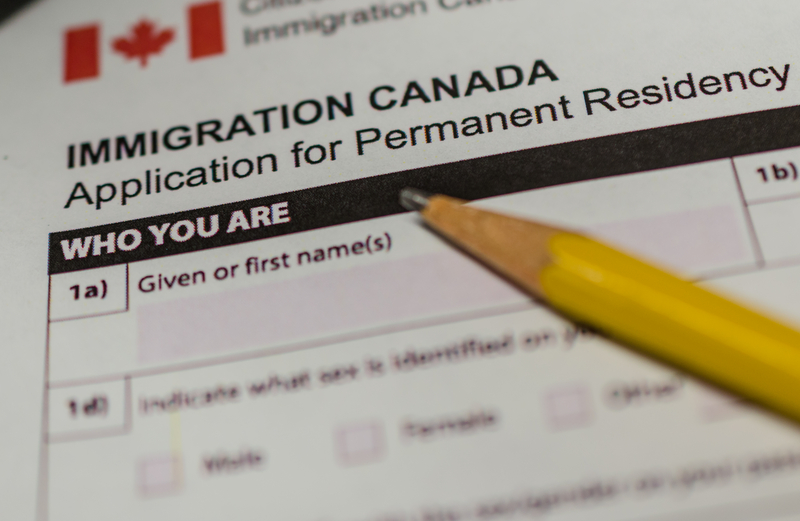
How to begin a Canada PR application from Mauritius
1. Assess the right immigration pathway. Review FSWP eligibility, other Express Entry programs and any relevant provincial or regional options.
2. Identify your correct NOC. Match your employment duties and work history to the right NOC code and applicable skill level.
3. Plan approved language tests. Consider English and French strategically; test results must meet IRCC’s accepted formats and validity requirements.
4. Check your education and documentation. An Educational Credential Assessment (ECA) may be required for foreign qualifications; collect employment evidence and civil-status records early.
5. Review proof of funds and settlement readiness. Requirements depend on the immigration program and your circumstances. Budget for tests, assessments, government fees and your eventual move.
6. Create or update a truthful Express Entry profile once eligible. Monitor changing requirements, invitation rounds and document deadlines; if invited, submit a complete PR application with supporting evidence.
Why choose Vikesh Immigration Services?

Choosing an immigration adviser means trusting someone with decisions that affect your career, finances and family. Our approach is built around four practical commitments:
Transparent advice. We explain eligibility, process requirements, costs and potential risks clearly so you can make informed decisions without misleading promises.
A dynamic, responsive team. We work collaboratively and communicate proactively to help keep your application preparation organized.
Detailed step-by-step instructions. We provide tailored document checklists and practical guidance, so you understand what to prepare, why it is needed and how to present it accurately.
Personal guidance from an RCIC. You receive individualized immigration guidance from a Regulated Canadian Immigration Consultant who considers your profile and the most appropriate available options.
We focus on doing the work carefully and helping you understand each decision—not on making guarantees about immigration outcomes.
Frequently asked questions about Canada PR from Mauritius
Yes. If you meet the rules for an eligible program, you may be able to apply from outside Canada.
Your location alone does not prevent you from being considered under the FSWP.
No. French is not mandatory for all Express Entry candidates, but qualifying French scores can provide extra points and eligibility for French-language category draws.
No, not for every pathway. The FSWP can be available without one. A genuine qualifying offer may affect certain program requirements or CRS points under the rules taking effect on 3 November 2026.
Often, eligible accompanying family members can be included, subject to the program’s definitions, admissibility requirements and your application details.
Costs depend on the pathway, family size and services used. Plan for language tests, any ECA, government fees, medical examinations, police documents and potential settlement funds. Review current official fees before paying.
Timelines vary by program, invitation rounds, application completeness and IRCC processing. Nobody can guarantee an invitation date or approval timeline.