
Table of contents
- Key Takeaways
- What the Government of Canada Announced
- Canada PR Targets for 2027 by Category
- Temporary Resident Targets for 2027
- The 200,000 Measure: Two Cohorts
- Where Does “622,000” Come From?
- What This Means for You
- What We Don’t Know Yet
- How Vikesh Immigration Services Can Help
- How to Begin a Canada PR Application
- Frequently Asked Questions
- Official Sources
On November 5, 2026, the Government of Canada tabled Budget 2026, and Immigration, Refugees and Citizenship Canada (IRCC) released the Canada Immigration Levels Plan 2027–2029 the same day. Since then, social media has been full of headlines like “622,000 new permanent residents” and “PR for 200,000 temporary residents.”
Some of this is true and some of it is exaggerated. As a Regulated Canadian Immigration Consultant, I explain below what the government actually announced, who may benefit, and what is still unknown.
Key Takeaways
- Canada will keep its permanent resident (PR) target at 380,000 a year in 2027, 2028 and 2029.
- New temporary resident arrivals stay at 370,000 a year: 220,000 workers and 150,000 international students.
- A new one-time measure in 2027 adds PR space for up to 200,000 people already living in Canada, on top of the 380,000 target.
- The 200,000 is split into a workers cohort (up to 100,000) and a humanitarian cohort (up to 100,000).
- The “622,000” figure is a media estimate, not an official government target. No general application portal has been announced.

What the Government of Canada Announced
In its immigration chapter, Budget 2026 says up to 200,000 temporary residents already in Canada “would have the opportunity to become permanent residents by the end of 2027.” It adds that, working with the provinces and territories, 100,000 of these places are for workers eligible for Express Entry or the Provincial Nominee Program (PNP).
IRCC describes the 200,000 places as “a new time-limited measure that will support work to reset the immigration system.”
For temporary residents, IRCC confirms that “targets for new temporary resident arrivals will stabilize at 370,000” for all three years of the plan.
Canada PR Targets for 2027 by Category
The overall 2027 target is 380,000 permanent residents, within a planning range of 352,500 to 422,000. The same targets apply in 2028 and 2029.
Economic immigration stays at more than 64% of all admissions. IRCC also says:
- Provincial Nominee Program and Atlantic Immigration Program admissions will increase.
- The Rural Community Immigration Pilot will become a permanent program.
- French-speaking PR admissions outside Quebec will rise to 9.5% in 2027, 10.5% in 2028 and 12% in 2029.
| Immigration Category | 2027 Target |
|---|---|
|
Economic immigration |
244,700 |
|
Family reunification |
81,000 |
|
Refugees and protected persons |
49,300 |
|
Humanitarian, compassionate and other |
5,000 |
|
Total |
380,000 |
Temporary Resident Targets for 2027
| Category | 2027 Target |
|---|---|
| Temporary workers | 220,000 |
| International students | 150,000 |
| Total new arrivals | 370,000 |
The 220,000 worker spaces are split between about 50,000 under the Temporary Foreign Worker Program (which needs an LMIA) and about 170,000 under the International Mobility Program (LMIA-exempt). These numbers count new arrivals only, not permit extensions for people already in Canada.
The 200,000 Measure: Two Cohorts
Workers cohort: up to 100,000 people
IRCC will work with provinces and territories to move up to 100,000 workers already in Canada, plus their families, to PR. Most of this will happen through extra PNP nomination spaces given to provinces, so they can nominate workers who meet their local labour needs. The Budget ties these places to workers eligible for Express Entry or the PNP.
IRCC also says it will finish its earlier In-Canada Workers Initiative in 2027. That initiative speeds up PR applications that are already in IRCC’s queue.
Humanitarian cohort: up to 100,000 people
This group is for people already in Canada who have often been waiting years for a decision. IRCC says it includes:
- Remaining applications under the Hong Kong PR pathways and the Ukraine Family Reunification Pathway
- People already approved in principle on humanitarian and compassionate (H&C) grounds
- Spouses, common-law partners and dependent children of Canadians and PRs who already live in Canada
Where Does “622,000” Come From?
The 622,000 figure is a calculation by immigration news outlets, not an official target. It adds the top of the PR range (422,000) to the 200,000 one-time measure.
Three cautions:
- 422,000 is the upper limit, not the target. The target is 380,000.
- “Up to” 200,000 is a maximum. IRCC has not promised to use every place.
- It is not yet clear how this overlaps with the earlier one-time measures for up to 33,000 work permit holders and about 115,000 protected persons in 2026–2027, which continue alongside the new measure.
A more realistic reading: 2027 PR admissions will likely be above the usual 380,000, but the final number depends on how IRCC and the provinces carry out the new measure.
What This Means for You
If you are working in Canada on a work permit: This is good news, especially if you have skilled Canadian work experience and could qualify for Express Entry or a provincial program. Watch your province’s PNP closely in 2027, because that is where much of the extra space is going. Make sure your Express Entry profile and documents (language test, ECA, work references) are current.
If you are a spouse or partner already in Canada with a pending sponsorship: Your file may be processed faster under the humanitarian cohort.
If you have a pending H&C application that has been approved in principle: You may be one of the people this cohort is designed for.
Important for Mauritius and other clients outside Canada: The 200,000 measure is only for people already living in Canada. Your path is still the regular plan of 380,000 PRs a year, plus study and work permits. With student arrivals capped at 150,000, a strong, well-prepared study permit application matters more than ever.
What We Don’t Know Yet
IRCC has not yet published:
- Exact eligibility rules for either cohort
- Whether any new application stream will open, or whether the measure will only speed up files already in the system
- How many extra PNP spaces each province will receive
- Dates and application steps
⚠ Beware of scams: At this stage, there is no new application form to submit. Be very careful with anyone who asks you to pay to “reserve a spot” in the 200,000 measure. No such process exists.
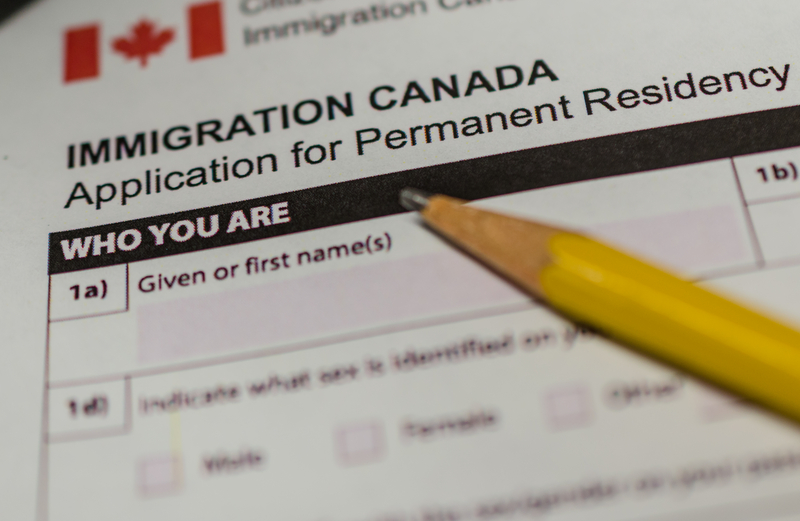
How to Begin a Canada PR Application from Mauritius
- Assess the right immigration pathway. Review FSWP eligibility, other Express Entry programs and any relevant provincial or regional options.
- Identify your correct NOC. Match your employment duties and work history to the right NOC code and applicable skill level.
- Plan approved language tests. Consider English and French strategically; test results must meet IRCC’s accepted formats and validity requirements.
- Check your education and documentation. An Educational Credential Assessment (ECA) may be required for foreign qualifications; collect employment evidence and civil-status records early.
- Review proof of funds and settlement readiness. Requirements depend on the immigration program and your circumstances. Budget for tests, assessments, government fees and your eventual move.
- Create or update a truthful Express Entry profile once eligible. Monitor changing requirements, invitation rounds and document deadlines; if invited, submit a complete PR application with supporting evidence.
How Vikesh Immigration Services Can Help
Our team can check whether you could qualify under Express Entry, a Provincial Nominee Program, or a family sponsorship, and help you get your file ready before provinces open their 2027 intakes. We will also update this article as IRCC releases more details.
Book a consultation with a Regulated Canadian Immigration Consultant (RCIC) at vikeshimmigration.com.
Why Choose Vikesh Immigration Services?

Choosing an immigration adviser means trusting someone with decisions that affect your career, finances and family. Our approach is built around four practical commitments:
Transparent advice. We explain eligibility, process requirements, costs and potential risks clearly so you can make informed decisions without misleading promises.
A dynamic, responsive team. We work collaboratively and communicate proactively to help keep your application preparation organized.
Detailed step-by-step instructions. We provide tailored document checklists and practical guidance, so you understand what to prepare, why it is needed and how to present it accurately.
Personal guidance from an RCIC. You receive individualized immigration guidance from a Regulated Canadian Immigration Consultant who considers your profile and the most appropriate available options.
We focus on doing the work carefully and helping you understand each decision—not on making guarantees about immigration outcomes.
Frequently Asked Questions
The target is 380,000 permanent residents, within a range of 352,500 to 422,000. The same target applies in 2028 and 2029.
Budget 2026 announced a one-time measure for up to 200,000 people already in Canada by the end of 2027. It is split between a workers cohort and a humanitarian cohort, each with up to 100,000 places.
No, not for every pathway. The FSWP can be available without one. A genuine qualifying offer may affect certain program requirements or CRS points under the rules taking effect on 3 November 2026.
Often, eligible accompanying family members can be included, subject to the program’s definitions, admissibility requirements and your application details.
Costs depend on the pathway, family size and services used. Plan for language tests, any ECA, government fees, medical examinations, police documents and potential settlement funds. Review current official fees before paying.
Timelines vary by program, invitation rounds, application completeness and IRCC processing. Nobody can guarantee an invitation date or approval timeline.
Official Sources
- Budget 2026, Chapter 3: Growing our skilled workforce
- IRCC backgrounder: Building a stronger Canada through a well-managed, predictable immigration system
- IRCC: Supplementary Information for the 2027–2029 Immigration Levels Plan
Disclaimer: This article is for general information only and is not legal advice. Immigration rules change often. Always check the latest information on official Government of Canada websites or speak with a licensed RCIC or lawyer about your situation.
Pingback: Express Entry CRS Changes From November 3, 2026: New High-Wage Points and No-LMIA Job Offers Explained – vikeshimmigration.com